The Products Of Gold Ore

by
 Gold within rock
Gold is produced from both primary and secondary sources , primary sources are mining activities and these take a variety of forms hard rock underground mining, open pit mining and dredging in the ocean lakes rivers and streams. Secondary sources refer to materials coming from recycled scrap metal scrap jewelry scrap electronic scrap spent sputtering targets and many others gold

From primary remaining sources in the american prospect is panning for both flakes and small nuggets in Riverbend ancient cultures occasionally found gold and silver and riverbeds also low deposit work gold is found within rock and placer deposits is where erosion has washed down from the hills and outcroppings of metal near the surface this lustrous and ductile.

Small nuggets from river
Metal was sought after throughout the centuries by almost all cultures metal jewelry artwork and eventually finding a place as monetary currency the majority of gold is mine from mineral deposits where it's found mixed with other metals and minerals these deposits are called or the ancient

Egyptians Greeks and Romans all developed underground mining operations a low deposits more than 2,000 years ago many of these vines especially in eastern europe greece turkey and other middle eastern countries are still economically viable and in production

Today pores are concentrated in veins which were formed millions of years ago deep under the earth surface. These veins were formed from hot water rising from hot magma the metal slowly precipitated out along these complex veins

Mines will also have side streams of gold and silver production which help. Their bottom line approximately twenty percent of gold is produced as a byproduct of copper and silver mining operations.
Following numerous paths approximately 70 million ounces of gold our mind each year the highest concentrations of gold found in North and South America are on both sides of the mountain ranges that run the length of these regions the sierra nevada in north america and the Andes in South America gold and silver are almost universally found in conjunction with copper deposits virtually all copper


Video  The Products Of Gold Ore

Gold Technology Carbon In Leach From Curtin University

by
Technology Carbon In Leach
Curtin University’s Gold Technology Grouph as designed and developed an automated “Carbon Meter" to continuously, reliably and accurately measure carbon concentrations in CIL tanks.

Currently, measuring the carbon to slurryratio involves taking a small sample from the tank, it’s time-consuming and has drawbacks interms of frequency, accuracy, and repeatability.

To optimising this process, you must precisely control the ratio of activated carbon to slurry.

Simply put, too much carbon is inefficient, while too little allows dissolved gold tobe lost to tailings.

But to control it, you first have to measure it. And this is true for the Carbon In Leachor CIL gold extraction process. Carbon-in-Leach accounts for about 75% of the world’s gold production.
Process Carbon In Leach
In this process, ground, gold-bearing ore is dissolved in a chemical slurry. Granules of activated carbon are added to absorb the dissolved gold, before further processing.
This robust, self-contained unit takes sample sup to 20 times larger than the manual method, every 15 minutes, 24 hours per day, whichit feeds into a measurement cylinder that strains the larger carbon particles from the slurry before a laser beam accurately measures the amount of captured carbon.

This data, along with the well-established SIMCIL modelling tool, is used to optimise carbon management to a degree not previously possible.

The end result is less soluble gold lost to tailings. Gold producers are processing higher tonnages of lower grades of ore than ever before.

And along with fluctuating gold prices and increased costs, optimising processes is the key tolong-term profitability.

For many CIL operations, optimisations resulting in recovery a 100th of a gram more gold per tonne of slurry processed, can increase annual revenue by millions of dollars. And this is a significant benefit for any mining operation.
Activated  Carbon for Carbon In Leach
Video Gold Technology Carbon In Leach From Curtin University

Prospecting For Lode Gold Deposits

by

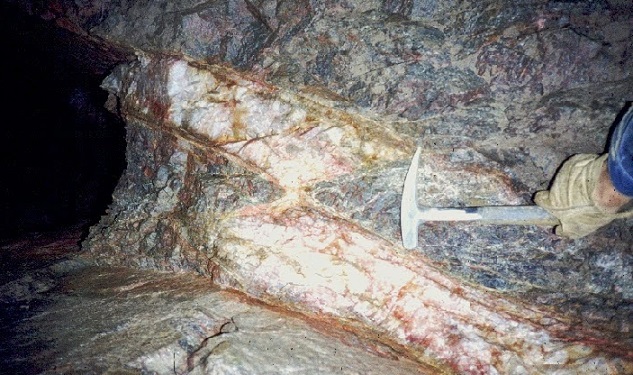
Most lode gold deposits are found in quartz veins that commonly called “Bull Quartz” by miners that are usually emplaced in a fault zone that might consist of one large vein or a whole series of quartz veins holding gold, or both.

According to one the glossary of geology, “a lode is a mineral deposit consisting of a zone of veins, veinlets, disseminations, or planar breccias; a mineral deposit in consolidated rock.

Lode gold occurs within the solid rock in which it was deposited. Areas likely to contain valuable lode deposits of gold have been explored so thoroughly that the inexperienced prospector without ample capital has little chance of discovering a new lode worth developing. Most future discoveries of workable lode gold ore probably will result from continued investigations in areas known to be productive in the past.


Prospecting for lode deposits of gold is not the relatively simple task it once was because most outcrops or exposures of mineralized rock have been examined and sampled. Today's prospector must examine not only these exposures, but also broken rock on mine dumps and exposures of mineralized rock in accessible mine workings. Gold, if present, may not be visible in the rock, and detection will depend on the results of laboratory analyses. Usually, samples of 3 to 5 pounds of representative mineralized rock will be sent to a commercial analytical laboratory or assay office for assay. Obviously, knowledge about the geological nature of gold deposits and particularly of the rocks and deposits in the area of interest will aid the prospector.

The dictionary definition of a vein is more complex include some of the definitions :

1.  An epigenetic mineral filling of a fault or fracture in a host rock, in tabular or sheet-like form, often with associated replacement of the host rock; a mineral deposit of this form and origin.

2. A zone or belt of mineralized rock lying within boundaries clearly separating it from neighboring rock. It includes all deposits of mineral matter found through a mineralized zone or belt coming from the same source, and appearing to have been created by the same processes

3. A rock fissure filled by intruded mineral matter. Many valuable minerals are co-deposited with gangue in veins. Usually the formation is steep to vertical, unlike a bedded deposit in which values are sandwiched horizontally. Vein is typically long, deep, and relatively narrow.

4. The term lode is commonly used synonymously for vein.

Most prospectors visualize a lode to be a distinct vein of quartz. But lodes include more than just veins. But let’s briefly look at veins first.  Veins can be formed primarily of quartz, but another common gangue mineral is calcite. Gangue minerals are worthless material that is found with valuable minerals, and when combined, the two produce ore. So ore is just a mixture of the good and bad stuff.

 The formation of ore shoot in veins is not entirely understood, but they appear in many cases to be the result of changes in chemistry sometimes due to changes in the rock type in the wall rocks. They have been identified where veins are folded or where veins intersect other veins or fractures.

Video Technical Level Basic How To Find Lode Gold Deposit

Mining Project Marlin Gold Ltd.

by

Marlin Gold Ltd is a publicly traded gold and silver mining company with properties in Sinaloa, Mexico and Arizona, USA. Marlin priority is to promote its properties in the direction of commercial production and shareholder value through the growth of its wholly owned subsidiary, Sailfish Royalty Corp. La Trinidad property in Sinaloa, Mexico, commercial production declared on November 1 increase in 2014 

Mining project of Marlin

1. Mining Project La Trinidad

The wholly owned La Trinidad gold project consists of 61,612 hectares (within a larger land package of 118,518 contiguous hectares) in Sinaloa, Mexico. The project is located approximately 110 kilometers southeast of the city of Mazatlan and 42 kilometers southeast of the city of Rosario.  

The most advanced target on La Trinidad is the Taunus deposit, previously of Eldorado Gold Corp ( “Eldorado”) 1996-98. After completing a preliminary economic assessment, negotiating surface rights and receiving environmental permits, Marlin has completed construction and is in the process of restarting commercial production at the Taunus deposit with a fist gold pour on February 28, 2014.

The Taunus deposit is considered a gold-rich intermediate sulfidation state ephitermal system. The mineralization occurs in strongly silicified tectonic and Quartz matrix hydrothermal breccia. Marlin acquired the Taunus deposit in 2005 and previously unknown gold mineralization identified by the deposit to a depth of approximately 200 m below the surface.

Due to the breccias nature of the rock types in the deposit area, including the mineralized material, a drilling was initiated as a sonic drilling known the end of 2010, and continued until September 2011. This drilling style was used in order to achieve maximum core recovery

 2. Commonwealth Mining Project

The Commonwealth project is a development project in the historical district Pearce Mining is located in southeastern Arizona (Cochise County). Historically, the mined at the Commonwealth Mine deposits were high-grade silver and gold ores in quartz veins and stockwork zones held alongside the veins. 

Production began in 1895, with commercial scale mining of the high grade ores ending in the late 1920s. Small-scale mining from property owners during this period continued until 1942. The Commonwealth Mine produced approximately 12 million ounces of silver and 138,000 ounces of gold, to make Arizona’s second largest historic primary silver producer. 

The project was extensively explored and was drilled by a number of companies from the 1970s until the mid-1990s, the access to open lower grade natural resources were open pit and heap leach extraction. Work reached the pre-feasibility study level in 1996 before being stopped due to low gold and silver prices. This work included a technical report a historical non NI 43-101 compliant mineral resource estimate, the economic analysis and pit design. 

These studies included more than 15,000 meters of reverse circulation and diamond drilling, extensive metallurgical studies, geotechnical investigations and geological mapping, underground channel sampling, financial models and mining plans. No work was done until 2011 on the project from 1997, when the property was optioned by the previous owner and then exploration resumed again

The mineral deposits on the Commonwealth Project are typical silver dominant, low sulfidation epithermal veins and stockwork. The veins are best in a series of Cretaceous to Tertiary volcanic rocks of andesite composition developed correlative with the Mexican Lower Volcanic Series rhyolite. Cretaceous marine sediments of the Bisbee Group also host mineralization and are chemically favorable hosts. 

The two main arteries are the main vein and the North Vein. Between these two lane, a wedge of volcanic rocks is  well-developed quartz stockwork veins that is mineralized with silver and gold. The vein system has been mapped over 1 km strike length and further to the east under alluvial cover. 

Drilling of this strike length to a maximum depth tested at least 800 meters of just over 200 meters. There is considerable potential extensions of the known vein system both east, west and to find the angle of inclination. All known veins in the district have a combined length of about 4.5 km away. 

3. El Compas Mining Project

The El Compas property is located in the heart of the world’s most prolific silver mining area is located in Zacatecas, Mexico. El Compas is identified host to a number of gold-bearing veins on the surface. These veins were mined on the underground from a private Mexican company. Past production records are not available; However, Marlin has confirmed that high-grade gold and silver mineralization within at least two of the vein structures (El Compas vein and El Orito vein) exists. The results of the previous exploration work in a NI 43-101 resource estimate report compiled in January 30, 2011

Although exploration efforts to date have focused on the gold bearing vein system at surface, Marlin believes that there is significant potential to explore for large scale silver bearing targets at depth hosted within Mesozoic rocks that are typical of the district.

 4. San Albino Mining Project

The project Gold San Albino consists of 8,700 hectares (San Albino-Murra concession) within a larger contiguous land package of 13,771 hectares. San Albino is located about 173 kilometers north of Managua, the nation’s capital, and about 15 km southeast from the northern border of Nicaragua with Honduras. The deposit is hosted from a series of shallow dipping quartz sulfide veins of graphitic argillite. The San Albino resource model consists of three high-grade, vein systems – the San Albino project, Naranjo and Arras veins – over a strike length of 850 meters, a down dip extension of 925 meters, with a minimum true width of one meter and average true width of 2, 6 m. 


Peak Gold Mines

by

Peak Gold Mines is a gold and copper mine underground which located in the Cobar Gold Field of Central West New South Wales, Australia, and began production in 1992. Peak Gold Mines produces gold dore for sale at the Perth mint and copper concentrate is sold to markets in Asia. 

The Peak Gold Mines comprise five commercially operating mines and a copper-gold-processing plant. The deposits, which all currently mined from underground, include, from south to north, the Perseverance, Peak, New Occidental, Chesney and New Cobar.

The Peak, New Occidental and Perseverance ore body are is accessed via a shaft and surface reduction in peak site. The new Cobar and Chesney ore body are accessed via a decline near the base of the new Cobar open pit. The Peak site is the processing plant and administration building.

At peak, Perseverance, New Occidental and New Cobar, do mining by using a bench stoping. If Chesney, a combination of bench stoping and open stoping is planned mining proceeds from bottom to top in each panel. Drifts are driven along strike to the ore at any level, developed a slot and ore is blasted into the cavity. Ore is extracted and waste rock is used to backfill the void. 

Peak Gold Mines in Cobar mining area, located about 600 kilometers northwest of Sydney and eight kilometers south of the town of Cobar in New South Wales (NSW), Australia. The property is of Sydney over 700 kilometers of highway and eight and a half kilometers of secondary and private roads. Limited resources are available at Cobar and generally available in Dubbo 300 kilometers east. The mines are operated by Peak Gold Mines Pty Ltd ( “PGM”), a subsidiary of the Company

Gold Mines Mineral rights exist about 86 110 hectares of mining leases and exploration licenses, including 33 832 hectares subject with an average maximum temperature of 33 degrees Celsius in summer and 16 degrees Celsius in winter.

Gold Mines Mineral rights exist about 86 110 hectares of mining leases and exploration licenses, including 33 832 hectares subject with an average maximum temperature of 33 degrees Celsius in summer and 16 degrees Celsius in winter.

Goldmines’ climate is semi-arid and average rainfall is about 416 millimeters per year. The landscape is mostly flat, consisting of sandy plains with small waves. The mine is named after the “peak”, a small conical hill 324.3 meters above sea level, which has the peak deposit located on its southern base. The vegetation at the mine consists largely of semiarid low forest, with little seasonal creeks and  rivers lined by taller eucalypt species.

Geology & Mineralization In Peak Gold Mine

The Cobar mining area is along the eastern margin of the Early Devonian age Cobar Basin, which lies in the northern part of the central belt of the Lachlan Orogen, and will of the regional scale Rookery Fault system.

The Peak Gold Mines operation is located in a 10-kilometer section of Rookery fault system, referred to as the “Peak mine corridor.” until today, five separate gold-copper deposits were developed in underground mines. Listed from south to north, they include: Perseverance, Peak, New Occidental, Chesney and New Cobar.

A sixth deposit, Great Cobar which was mined from around the time of the first world war until the mid-1940s, is located at the northern end of the peak-floor and provides an area of ​​renewed exploration focus.

Individual deposits occur as steeply dipping veins with equally short strike lengths (less than 300 meters), narrow widths (10 to 30 meters) and long vertical dimensions. For example, the peak and Perseverance have defined deposits to vertical depths of 500 to 700 meters. The Chesney and New Cobar deposits are currently being defined by shorter vertical areas and like all of the deposits along the Peak mine corridor remain open at depth. 

Mineralization of polymetallic sulphides consisting of gold-copper vary -lead-zinc assemblages at peak and Perseverance to simpler copper-gold in New Cobar, Chesney and Great Cobar. Generally, gold mineralization occurs as discrete lenses within broader envelopes of base metal mineralization.

Including commercial mine production from Great Cobar and the resurgence of mining in 1991, the Peak Mines corridor produced over 3.7 million ounces of potential gold and 200 million pounds of copper.

Processing Of Mineral Ores

Ore from Peak, Perseverance and New Occidental underground is crushed and hoisted onto a surface stockpile and eventually into the mill feed conveyor SAG. Ore from New Cobar and Chesney is dragged tip, where it is fed to the SAG mill feed conveyor via a separate container.

Gold and silver are recovered in a gravity circuit with Knelson concentrators, further concentrated in an intensive leach reactor electrolytically and mud in a gas-fired furnace smelted to gold doré bars produce. Gold, silver and copper are obtained as copper concentrate in a conventional flotation circuit.

The flotation concentrate is thickened, dewatered and stockpiled prior to the stage of the process to transporting to the smelter. A third method of gold and silver recovery by cyanidation in a tank leach circuit. The resulting sludge is smelted into gold dore bars. Metal recoveries are approximately 90% and 87% for gold and copper.

Exploration Potential In Peak Gold

Since the beginning of commercial production in 1991, underground exploration to the known ore body along the Peak corridor added to new reserves again, its for replace annual production.

For example, with a mineral reserve of 936,000 ounces of gold in the Peak deposit in 1991 begin to sustainable exploration and development mining reserves substitute has  of the end in the delineation of mineral reserves and resources amounting to almost three times  that amount as of the end of 2014.

With a twenty-year track record of successful reserves replacement and control of more than  75 kilometres of prospective geology along the greater Rookery fault trend, exploration at Peak continues to offer significant upside toward future exploration success.

Top Ad 728x90