Precious Metal Recovery ( Video )

by

Precious Metal Recovery refers to the reclaiming of precious metals from specific scrap materials. Many precious metal recovery services employ state of the art refining techniques, for extracting metals such as gold, silver and platinum etc.

These processes can extract precious non-ferrous-metals from industrial scraps, wires tubes and dishoarded bars. Recovery services are used in a variety of industries including, aerospace, jewelry, medical and the semi-conductor and printed circuit board industries.

These services may also include reducing the metal lots to assaying bars for evaluation, by utilizing thermal processes. Metal refining capabilities can include, melting and thermal reduction through incineration.

Recovery refers to the separation of precious metals from noble-metalliferous materials, some of these materials may include catalysts such as electronic assemblies or printed circuit boards. 

To isolate or remove the metals, procedures such as hydrolysis or pyrolysis are commonly employed. With hydrolysis, the noble-metalliferous materials can be dissolved in hydrochloric acid and chlorine gas solution, or dissolved in Aqua regia, which consists of hydrochloric acid and nitric acid. 

In the procedure known as pyrolysis the precious metals are removed by solidifying in a melt to become cinder, and then oxidized. Some metals may be reduced directly with a gas or salt or nitro hydrate connection.

This is followed by various cleaning stages or are recrystallized, and the metals can then be separated from the salt by calcination. These precious metal materials are first hydrolyzed and then thermally prepared (pyrolysed) thereafter. The recycling product is removed and put several times through the cycle.

Precious metal recovery services are companies that purchase materials such as printed circuit boards, old wires, and industrial scraps that contain various precious metals such as :

o Gold & Silver

o Platinum

o Nickel & Tin

o Rhodium

o Palladium

o Copper & Bronze

These materials are then put through various processes to extract the precious metals from them. This makes good economical and environmental sense.

These services may also include buying old jewelry, and other valuable scrap metals such as :

o Brass

o Copper

o Bronze

o Aluminium

o Phosphor Bronze

These metals can then be smelted down and reused, thus saving valuable resources.

This is Video from Precious Metal Analysis - Instrumental Methods for Gold, Silver, Platinum, Palladium and other PGMs


Related Articles And Video :

- Precious Metal Refiners Purify Gold ( Video )
- How Process Fire Assaying For Mineral (Video)

How Process Fire Assaying For Mineral (Video)
by

Fire assaying for mineral is the oldest and is considered to be the most reliable method of determining the content of gold and silver in rock or concentrate samples. This method is still the industry standard. The reason why it is called ”fire” assay is simply because it involves smelting the sample which has been mixed with lead oxide.

There are six basic steps in the fire assay procedure: 
  • Splitting 
  • weighing 
  • mixing 
  • firing 
  • cupelling
  • parting.
How the process fire assaying for Mineral

First, the crushed and ground sample of ore or concentrate is carefully split down to smaller samples only around 30 grams. These samples are weighed out and added to a crucible. A mixture of lead oxide, a reducing agent and fluxes is then added. The fluxes usually consist of silica sand, borax and sometimes additional additives like fluorite. The fluxes, reductant, lead oxide and sample are then mixed and fired in a muffle furnace.

The contents of the test material into the container then let all the ingredients to melt in the furnace smelting. In the presence of the reducing agent, typically carbon in any form, e.g. flour, the lead oxide is smelted to lead metal which “collects” any silver and gold that may have been in the sample.

The molten mass is taken from the furnace and mixed before being poured into a cone-shaped mold and allowed to cool. The molten lead sinks to the bottom of the mold, carrying any gold and silver with it, while the rest of the components of the ore along with the flux turn into a glassy slag that floats on top.

After cooling, the metallic lead at the bottom of the mold is separated from the glassy slag which is discarded. The lead is called a “button.”

This metallic lead button is then placed into a cupel, a small dish made from bone ash, and placed into a cupelling furnace. In the “cupelling” process, lead metal turns back into oxide which separates away from the precious metals and soaks into the bone ash cupel, leaving the minute amount of precious metals as a metallic speck called a “bead.”

The next step in the process is called parting, where the bead is weighed to determine the amount of gold and silver that was extractable from the original ore sample.

The bead is then heated in hot nitric acid which dissolves the silver, leaving any gold that may have been present. The parted bead is then carefully weighed and amount of gold is related back to the weight of ore or concentrate sample in the first crucible that was burned.

In more modern laboratories, the bead of precious metals that is recovered in the cupel after the lead has been removed is dissolved in aqua regia. The resulting solution is then analyzed by atomic absorption spectrometry, allowing the grade of gold and silver in the original sample to be back calculated.

Fire assaying is a science, and also to some extent is still an art. Certain types of ore contain elements that may interfere with the result. A good fire assayer knows how to modify the composition of the flux to avoid these problems. The fire assayer knows how to determine the gold and silver content of the assay ton of sample that has been presented.


Video Fire Assay Explained- The Workhorse of Precious Metal Analysis - Gold, Silver and PGMs

Read Also :


- Precious Metal Refiners Purify Gold 
- Gold Analysis Technical By Chemical

Gold Mining In Azerbaijan

by

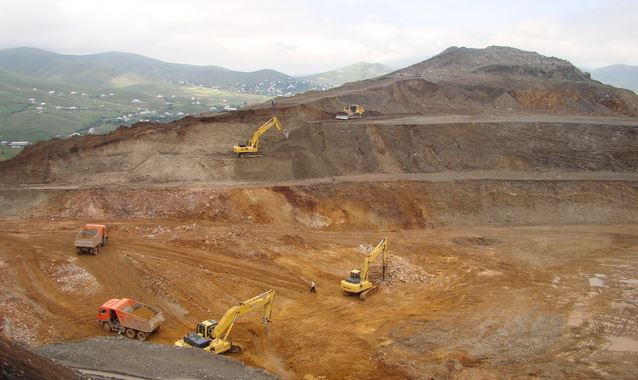
Azerbaijan known as gold production country in Eurasia region. The country is known as producing for a number of important minerals and with the recent development in the mining sector, there is increased exploration activities.

Oil and gas are the two dominant minerals in the country’s economy, but gold is among its most important minerals and is one of the most lucrative sectors in Azerbaijan. With most of the gold resources of the country are still untapped there is still room for more interesting investors in mining investments 

History gold mining in Azerbaijan

Gold mining can be traced back to the time of the Albanian kingdom. The history of gold production areas of the country derived from thousands of years, however gold mining was early on a Little scale with rudimentary methods. Most of the gold was then mined used for trade in the kingdom and with the neighboring kingdoms.

The recent history tracks gold mining at around 1894 when brothers Mekhor a copper mining operation commenced operation, which also produces gold at today Gedabek gold mine. However, the mining came to an abrupt finish in 1917 when the Russian Revolution began 

More gold mines were made primarily on a Little scale by the locals. Gold mining is still an important part of the economy of the country. Gold is produced in the country much smaller in size when compared to some of the leading gold producers in the world.

This is perhaps because most of the gold in the country is produced by Little operations. But with the entry of Large miners in recent times, the gold production in the country is likely to rise.

Some of the major players in the gold production in the country include the following :

AngloAsian Mining

This is the leading gold mining companies in Azerbaijan. The company has rights to six major gold deposits in the country. These gold deposits are Soyutlu, Gedabek, Gyzyl, Ourdubad, Vezhnali and Gosha Bulag. For all of these rights, the company has signed a production sharing agreement (PSA) with the government Mine Approximately 400 tons of gold and 2,500 tons of silver. 

The company currently operates two Large gold mines; the Gosha gold mine and the Gedabek gold mine has a total of Approximately 80,000 ounces of gold per year. The Gedabek gold mine, which is approximately 55 km from Ganja City the biggest of the two mines with an estimated gold resource of Approximately 1.05m ounces of gold, Approximately 8.62m ounces of silver and 81,750 tons of copper.

The mine produced Approximately 50,000 ounces of gold annually. The Gosha gold mine on the other Middle is a Little mine on a 300km2 site and Approximately 50 km from the Gadabek Goldmine.

The mining operation started in 2013 and is expected to produce Approximately 15,000 ounces of gold per year for five years. To improve the production of AngloAsian a new technology introduced in the mine.

The ore is leached then stirred to increase its gold production of sulfides and oxides by more than 65% and 85% respectively. This helps to increase Approximately 20% of the total gold production.

AIMROC is another important gold producing companies in Azerbaijan. The company signed a production sharing agreement (PSA) with the government in two years in 2006 and owns the mineral rights to six gold projects in the country. This gold projects are Goydag, Kurekchay river basins, Garadagh, Dagkesaman, Chovdar and Kohbemadan. The company operates only a gold mine with the rest of the projects are still in development. The Chevdar gold mine began in 2012 and operates it is estimated that Approximately 40 tons of gold  the contained resources

Also Read:

Gold Mineral Resources In Tajikistan

Gold Mining In Saudi Arabia ( Video )


Gold Mining In Armenia

by
Gold mining and the mining industry in common is very important for the economy of Armenia, contributing Approximately one half of its total exports. The main mineral is molybdenum but Armenia is also to have significant gold reserves located in its territory. The country has Approximately 13 operational gold and gold polymetallic mines. There are also several other deposits still in development. This means that the country still has to be considered a great potential for gold investors. 

Armenia Gold mines
Armenia has a history of gold mining that goes back many centuries. Most of the early gold mining was done in the early years, to finance the construction of religious locks in early Asia. During the Soviet era, the country had a modest gold sector with the production in 1989 slightly more than two tons of gold. 

The gold production after the split from the Union in 1991. The country went to below 1000 kg in 1995. by a depression, but has recovered and now gold is one of the main exports. The growth of gold production in recent years has been adopted by the legal reforms in 2012 in collaboration with the International Finance Corp (IFC), reviewed the government of Armenia and adopted its new mining law in 2012 so that further opening Aided was its mining sector. This has seen an increase in domestic gold production in recent years. The new mining laws Permit a two-tier licensing structure that will Aid the industry attract investment.

Gold Mining In Armenia

The mining sector to invest, a 4% tax on gross income, 12.5% ​​royalties based on the result. All these royalties are important deductions that arrive before a 20% corporate tax and the interest will be charged.

The gold mining in Armenia has more foreign investment. The first Dynasty Mines, which is registered in Canada, was the first foreign company to invest in the country’s gold sector. In 1997, the First Dynasty Mines bought a stake in the Ararat Gold Mining Plant. The plant was later converted to the Ararat Gold Recovery Company, before it was sold to GeoProMining Gold in 2007. 

Geo ProMining Gold is the largest gold mining company in Armenia is operating both the Ararat gold recovery plant and Zod (Sotk) mines , The company reconstructs the gold processing plant at Zod mines in 2013 to use a new technology Albion. This technology was developed by the Australian company Xstrata Technology and has been applied for the first time in the Dominican Republic. Armenia is now in the world to apply the second country. The Albion technology enables the company to simultaneously process different types of ores. This is expected to contribute to Approximately 4.6 tonnes per year gold production from the mine to.

Another important player in the gold sector of the country is the Lydian international, another Canadian gold mining company. The company owns and operates the Amulsar gold mine open pit, which is located in southern Armenia. The company has its major discovery in 2006 and the development of the mine in 2012 with production in 2015.

The Amulser gold deposit is estimated that Approximately 2.3 million ounces of gold reserves at 0.8 g / t and approximately 9.98 million ounces of silver contained begun starting in a content of Approximately 3.4 g / t. It is estimated to produce the gold mine Approximately 6.25 tons of gold per year for 10 years. 

Another major player in the Armenian gold mining the Dundee Precious Metals Inc., through its subsidiary Deno Gold, which owns the Deno Gold Project in southern Armenia and operates. The project is expected to comprise around 400,000 tons of polymetallic gold and silver ore. The company is also working on the shahemyan deposits still in Deno Gold Project. 


Video Gold Mining In Armenia And Mining Industry Today

Precious Metal Refiners Purify Gold ( Video )

by

Throughout the world there are mines that are extracting precious metals out of the ground and sending them to gold refiners where they can be purified. Taking the lumps of rock and ore that are mixed together in veins the precious metal refiners are able to extract the gold from the rest of the rock by melting it down.

Once in a liquid form the gold can be poured and cast into ingots or molded to form chains and other jewelry. By superheating the raw minerals to their boiling point gold refiners are able separate the rock and purify the precious metal to its full glory.

As gold is not always as shiny and brilliant when it is unearthed as it is once it has been refined most people do not recognize the valuable mineral if they were to stumble upon it while hiking. Running in veins through the rock the precious ore is mixed with all kinds of material that has to be separated and sifted before the gold receives its luster.

In many instances only the dull yellow tint of a rock reveals the gold that is hidden beneath the earth. Through the process of refining the dirt and other minerals fall away until all that remains in pure gold. However, most of the minerals that are surrounding the vein of gold contain other precious metals refiners can use in their work. Platinum, palladium, rhodium and silver can be found alongside the gold 


Top Ad 728x90