Gold Technology Carbon In Leach From Curtin University

by
Technology Carbon In Leach
Curtin University’s Gold Technology Grouph as designed and developed an automated “Carbon Meter" to continuously, reliably and accurately measure carbon concentrations in CIL tanks.

Currently, measuring the carbon to slurryratio involves taking a small sample from the tank, it’s time-consuming and has drawbacks interms of frequency, accuracy, and repeatability.

To optimising this process, you must precisely control the ratio of activated carbon to slurry.

Simply put, too much carbon is inefficient, while too little allows dissolved gold tobe lost to tailings.

But to control it, you first have to measure it. And this is true for the Carbon In Leachor CIL gold extraction process. Carbon-in-Leach accounts for about 75% of the world’s gold production.
Process Carbon In Leach
In this process, ground, gold-bearing ore is dissolved in a chemical slurry. Granules of activated carbon are added to absorb the dissolved gold, before further processing.
This robust, self-contained unit takes sample sup to 20 times larger than the manual method, every 15 minutes, 24 hours per day, whichit feeds into a measurement cylinder that strains the larger carbon particles from the slurry before a laser beam accurately measures the amount of captured carbon.

This data, along with the well-established SIMCIL modelling tool, is used to optimise carbon management to a degree not previously possible.

The end result is less soluble gold lost to tailings. Gold producers are processing higher tonnages of lower grades of ore than ever before.

And along with fluctuating gold prices and increased costs, optimising processes is the key tolong-term profitability.

For many CIL operations, optimisations resulting in recovery a 100th of a gram more gold per tonne of slurry processed, can increase annual revenue by millions of dollars. And this is a significant benefit for any mining operation.
Activated  Carbon for Carbon In Leach
Video Gold Technology Carbon In Leach From Curtin University

Prospecting For Lode Gold Deposits

by

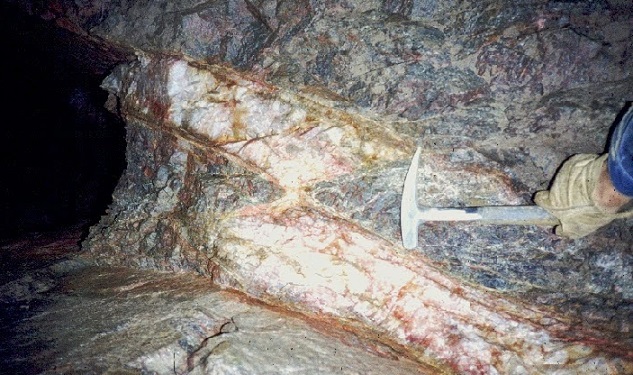
Most lode gold deposits are found in quartz veins that commonly called “Bull Quartz” by miners that are usually emplaced in a fault zone that might consist of one large vein or a whole series of quartz veins holding gold, or both.

According to one the glossary of geology, “a lode is a mineral deposit consisting of a zone of veins, veinlets, disseminations, or planar breccias; a mineral deposit in consolidated rock.

Lode gold occurs within the solid rock in which it was deposited. Areas likely to contain valuable lode deposits of gold have been explored so thoroughly that the inexperienced prospector without ample capital has little chance of discovering a new lode worth developing. Most future discoveries of workable lode gold ore probably will result from continued investigations in areas known to be productive in the past.


Prospecting for lode deposits of gold is not the relatively simple task it once was because most outcrops or exposures of mineralized rock have been examined and sampled. Today's prospector must examine not only these exposures, but also broken rock on mine dumps and exposures of mineralized rock in accessible mine workings. Gold, if present, may not be visible in the rock, and detection will depend on the results of laboratory analyses. Usually, samples of 3 to 5 pounds of representative mineralized rock will be sent to a commercial analytical laboratory or assay office for assay. Obviously, knowledge about the geological nature of gold deposits and particularly of the rocks and deposits in the area of interest will aid the prospector.

The dictionary definition of a vein is more complex include some of the definitions :

1.  An epigenetic mineral filling of a fault or fracture in a host rock, in tabular or sheet-like form, often with associated replacement of the host rock; a mineral deposit of this form and origin.

2. A zone or belt of mineralized rock lying within boundaries clearly separating it from neighboring rock. It includes all deposits of mineral matter found through a mineralized zone or belt coming from the same source, and appearing to have been created by the same processes

3. A rock fissure filled by intruded mineral matter. Many valuable minerals are co-deposited with gangue in veins. Usually the formation is steep to vertical, unlike a bedded deposit in which values are sandwiched horizontally. Vein is typically long, deep, and relatively narrow.

4. The term lode is commonly used synonymously for vein.

Most prospectors visualize a lode to be a distinct vein of quartz. But lodes include more than just veins. But let’s briefly look at veins first.  Veins can be formed primarily of quartz, but another common gangue mineral is calcite. Gangue minerals are worthless material that is found with valuable minerals, and when combined, the two produce ore. So ore is just a mixture of the good and bad stuff.

 The formation of ore shoot in veins is not entirely understood, but they appear in many cases to be the result of changes in chemistry sometimes due to changes in the rock type in the wall rocks. They have been identified where veins are folded or where veins intersect other veins or fractures.

Video Technical Level Basic How To Find Lode Gold Deposit

Top Ad 728x90